Why is my furnace running but not blowing hot air?
Start with the thermostat and filter. A clogged filter or a dirty flame sensor can cause cool air. If the checks do not help, a provider should test the igniter, gas supply and safety switches.
Request an estimate for your furnace
A furnace that will not start, blows cool air or makes odd noises is a problem you want sorted out. Fingerscosts Heating & Air is a referral service. We connect homeowners in Kenner with independent HVAC providers in our network who diagnose and repair furnaces.
This page walks you through what to do in order. Start with gas safety. Then run a few simple checks you can do yourself. Then learn when to stop and let a pro take over. A careful repair protects the house, keeps the system working the way it should, and helps protect resale value. Winters here are mild, so your furnace may sit idle for months. That makes a first cold night a common time for trouble to show up. Check, then call.
A rotten-egg smell means stop. Do not flip switches, light anything or use a phone inside. Walk everyone out, including pets. Then phone the gas utility or 911 from outside.
A hissing sound near the furnace is another reason to leave. So is a carbon monoxide alarm. Carbon monoxide has no smell. If your detector sounds, get out first and ask questions later.
No gas smell, just a cold house? A few checks take about ten minutes. Start with the easy ones.
Set it to heat. Raise the target a few degrees above room temperature. If the screen is dim or blank, swap the batteries. Make sure the fan setting is on auto.
A clogged filter chokes airflow. That can trip a safety switch and shut the furnace down. Slide it out and hold it to the light. If you cannot see through it, replace it.
Most furnaces have a wall switch that looks like a light switch, often near the unit. Make sure it is on. Then check the breaker panel. Reset a tripped breaker once. If it trips again, leave it alone.
Furnaces in closets and attics collect clutter. Move boxes, paint cans and laundry away. Keep the area around the vent pipe open and clean.
Stay out of the gas valve, burners, wiring and heat exchanger. Do not pull panels past the filter door. Never bypass a safety switch to get heat running. Those switches protect your home from fire and fumes.
If the quick checks do not help, it is time for a provider. Request a callback to check provider availability in your area.
Some signs are loud. Others creep in. Watch for these:
A yellow flame and soot near the unit deserve extra caution. Turn the furnace off and have a provider look at it.
A provider usually starts by asking when the problem began and what you have already tried. Tell them about the checks you did. It saves time.
Next comes testing. They look at the thermostat, igniter, flame sensor, blower, vents and safety switches. They check airflow and gas pressure. Then they explain what they found and give you a written quote before any repair work starts.
Most furnace calls come down to a short list of parts.
A worn igniter or a dirty flame sensor keeps the furnace from staying lit. These are among the more common fixes.
A weak blower motor or a worn capacitor gives you low airflow or no airflow. Grinding noises often point here.
Burned contacts or a failing board can cause random shutdowns. This work belongs with a pro.
Age matters. Many furnaces run 15 to 20 years with good care. If yours is near that range and the repair is large, compare a repair quote with a furnace replacement quote. Ask for both in writing.
A cracked heat exchanger usually tips the scale toward replacement. Frequent breakdowns do too. A newer unit can also use less fuel. If you are searching for furnace replacement near me, an estimate from a local provider is a good first step.
Older houses hide surprises. A furnace may sit in a tight closet, a crawl space under a pier-and-beam floor, or a hot attic. Old ductwork can leak. Past repairs may have left patched vents or mismatched parts.
Tell the provider what you know about the house. Ask them to look at the vent pipe, duct joints and the space around the unit, not just the furnace itself.
A careful repair does more than bring back heat. It keeps fumes out of living space, protects ducts and framing from moisture and heat, and leaves a record of service. That paperwork helps when you sell. Keep every invoice in one folder.
Before you say yes, ask:
A clear provider answers these without fuss. If something feels rushed, get a second opinion.
You have done the safe checks. Now let a pro do the rest. Many providers in the Kenner area can respond quickly, though availability varies.
A provider tests the thermostat, igniter, sensors, blower and safety switches to find why your heat quit.
Worn igniters, sensors, motors and capacitors can often be fixed or swapped during one visit.
Vent pipes, flame pattern and airflow get a look so fumes stay out of your home.
You get the problem, parts and labor explained in writing before work begins, so you can decide calmly.
Prices vary by furnace age, brand, parts and how hard the unit is to reach. These are typical U.S. ranges only. Always ask for a written quote before approving work.
| Repair item | Typical range | Notes |
|---|---|---|
| Diagnostic visit | $75 – $200 | Often applied toward the repair if you proceed |
| Igniter replacement | $100 – $400 | Common no-heat fix on newer furnaces |
| Flame sensor clean or replace | $75 – $300 | Cleaning costs less than a new sensor |
| Blower motor | $400 – $1,500 | Price depends on motor type and access |
| Inducer motor or control board | $300 – $1,000 | Parts for older models can cost more |
| Heat exchanger repair | $1,500 – $3,500 | Often leads to a replacement conversation |
If you smell gas, leave the house and phone the gas utility or 911 from outside.
Test the thermostat, filter, furnace switch and breaker. Write down what you tried.
Request a callback or send the form so a local provider can review your situation.
Compare repair and replacement options, ask questions, then choose what fits your home.
Simple checks solve some problems, so you only book a provider when you truly need one.
We name the jobs that belong to a pro, so you stay safe.
You are matched with independent providers who know homes in Kenner.
A careful repair protects your home and its resale value.
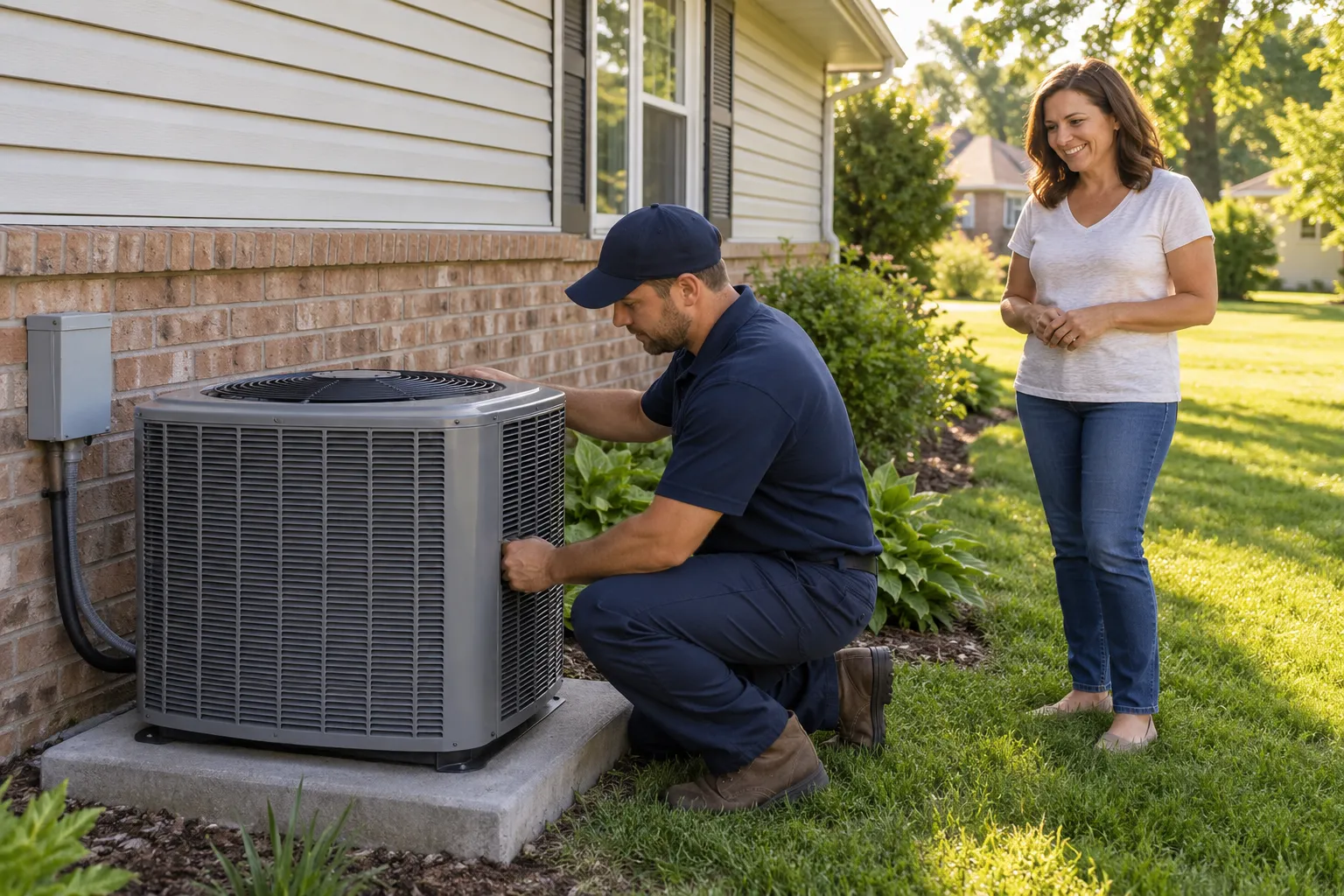
Tell us what your system is doing. Request an estimate, or Request a callback to check provider availability in the Kenner area. No obligation to move forward.
No obligationStart with the thermostat and filter. A clogged filter or a dirty flame sensor can cause cool air. If the checks do not help, a provider should test the igniter, gas supply and safety switches.
Resetting a tripped breaker once is fine. If the furnace shuts off again or you smell gas, stop. Do not keep resetting it. Have a provider inspect it.
Age near 15 to 20 years, frequent repairs, rising bills or a cracked heat exchanger are common signs. Ask a provider for a written repair quote and a replacement quote to compare.
Tell us what your system is doing. Request an estimate, or Request a callback to check provider availability in the Kenner area. No obligation to move forward.
No obligation